Choosing between torsion and extension springs can make a repair quote seem harder to judge than the broken spring itself. The visible difference is where the spring sits, but the price also reflects hardware, labor, balance adjustments, and the door’s existing layout. In Leawood, the guide band for this job is $189 to $459, although the written scope matters more than the band alone. A useful comparison shows what the pros we connect you with are replacing, changing, and testing.
This guide separates the systems before comparing their costs. It also explains safety cables, headroom, cycle rating, and the questions that should appear in a clear quote. Cold weather can expose fatigue in either design, especially when a spring has already accumulated substantial use. Understanding the setup helps you compare recommendations without assuming that a more expensive option is automatically better for your door.
Where Torsion and Extension Springs Sit
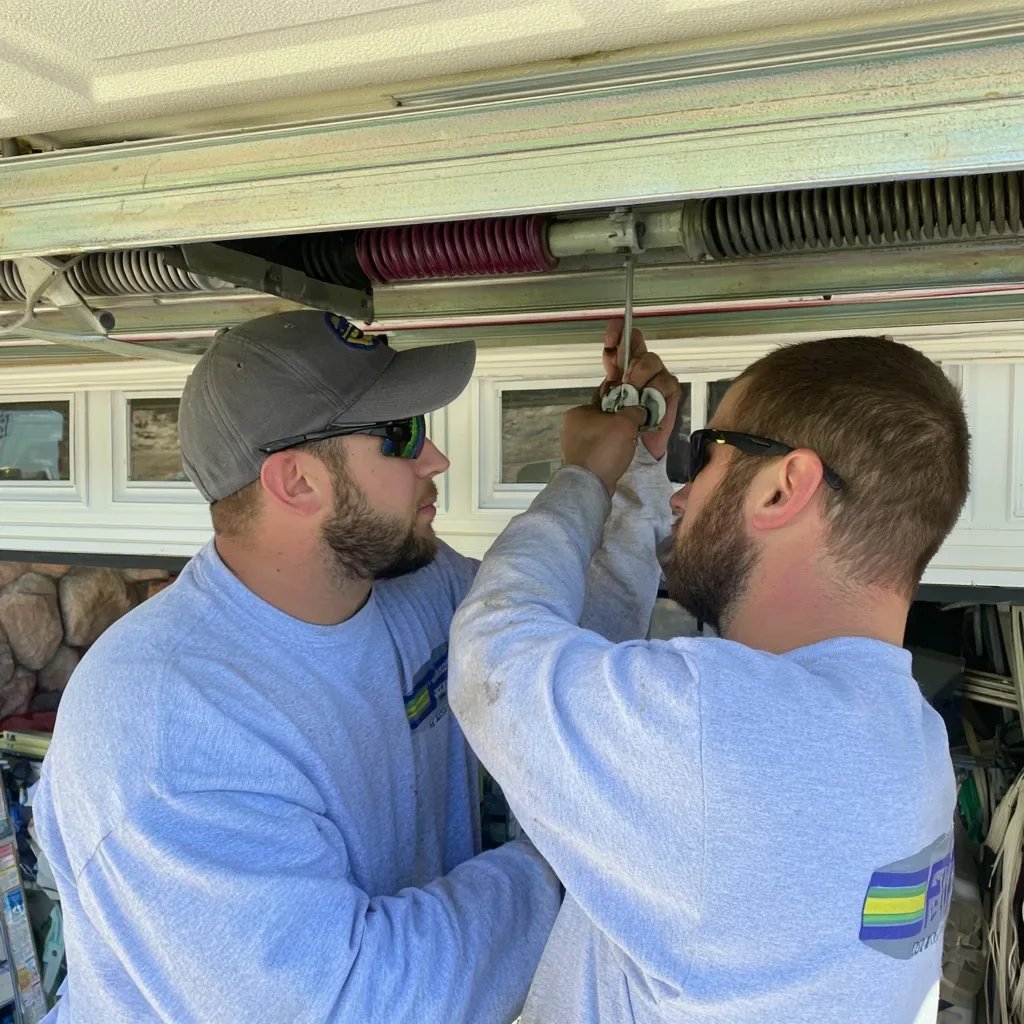
A torsion spring sits above the garage door opening, mounted on a shaft between bearing plates. Drums at the shaft ends guide the lift cables as the spring turns and transfers torque through the shaft. The spring normally remains centered over the opening, although the exact hardware depends on the door design and available space. Its position lets the system balance the door through controlled shaft movement.
Extension springs sit alongside the horizontal tracks, stretching as the door opens and returning energy as it closes. Each spring works with a pulley, cable, and safety cable, with the assembly extending toward the rear of the garage. Because the springs occupy the track area rather than the space above the opening, their layout differs substantially from torsion hardware. The pros we connect you with should identify that arrangement before discussing replacement or conversion work.
Why Torsion and Extension Prices Differ
Price differences usually begin with the parts included in the repair. A torsion job may require a spring, drums, shaft hardware, bearing plates, cable adjustments, and related fasteners, while an extension repair may involve springs, pulleys, cables, and safety cables. Neither list is automatically cheaper because the door’s weight, condition, and hardware compatibility influence the scope. A quote that names only a spring leaves important cost drivers unexplained.
Labor also differs because each system requires a distinct setup and balancing process. Torsion work demands careful winding, shaft alignment, drum placement, and door balance testing, while extension work requires matched spring tension and pulley alignment. Removal of damaged hardware, access around the tracks, and corrections to worn cables can add work in either system. The guide band of $189 to $459 gives context, but itemized labor and parts explain where a recommendation sits within it.
How to Tell Which System Your Door Has
Look above the door opening for a horizontal shaft carrying a spring, drums, and bearing plates. That arrangement identifies a torsion system, even when a cover or insulation makes the coil less visible. If the springs run beside the horizontal tracks toward the rear, the door uses extension hardware instead. The cables, pulleys, and mounting points provide additional clues when the springs are difficult to see from the floor.
Do not pull, lift, unwind, or disconnect spring hardware while identifying the system. A broken torsion spring may still hold stored force, and an extension spring can move unexpectedly if its cable or pulley is disturbed. From a safe distance, note whether the spring is above the opening or alongside the tracks, then share those observations with the pros we connect you with. In Leawood, a clear photo of the full opening and track area can help them prepare a more accurate scope.
Safety Cables Belong With Extension Springs
Safety cables pass through extension springs and attach to secure points at the rear track supports. If an extension spring breaks, the cable helps contain the spring instead of allowing it to travel freely across the garage. That containment reduces the chance of damage to vehicles, stored belongings, or people nearby, although it does not make a damaged spring safe to handle. The cable must be correctly routed, anchored, and free from damaging kinks.
A quote for extension spring work should identify safety cables separately when existing cables are missing, corroded, loose, or incorrectly installed. Reusing questionable cable hardware can leave the replacement spring without proper containment. The pros we connect you with should inspect the attachment points, pulleys, track supports, and cable path before setting tension. Safety cables are not a decorative add-on; they are part of the extension system’s protective design and deserve clear treatment in the repair scope.
What a Changeover Involves
Changing from extension to torsion is a hardware conversion, not merely a spring swap. The existing extension springs, pulleys, cables, and related supports are removed or made redundant, then the pros we connect you with install a shaft, torsion spring, drums, bearing plates, and suitable mounting hardware. The lift cables must be routed correctly, and the shaft must sit squarely so both sides of the door share the load.
After installation, the door needs balance testing through its travel, along with inspection of hinges, rollers, tracks, and cable attachments. The opener may also need adjustment because a newly balanced door can behave differently from the old setup. A complete changeover quote should state which existing components are removed, which new components are supplied, and whether damaged surrounding hardware is included. The work should be judged as a coordinated system rather than as a replacement coil alone.
When Paying for a Changeover Makes Sense
A changeover may be worth considering when extension hardware repeatedly damages pulleys, lacks usable safety cables, or requires repairs that approach the cost of a better-supported torsion setup. It can also make sense when the door’s framing provides suitable space above the opening and the owner wants a different service arrangement for future repairs. The decision should follow an inspection of the complete system, not a general belief that torsion is always superior.
Cost matters because conversion includes removal, new hardware, installation, and balancing rather than a single replacement part. A changeover may be harder to justify when the existing extension system is correctly installed, safely contained, and otherwise in good condition. Ask the pros we connect you with to explain the practical benefit for this specific door, the parts that will remain, and the maintenance implications. A recommendation is more useful when it connects the added work to a defined problem.
Headroom Can Rule Out a Changeover
Torsion hardware needs usable space above the garage door opening for the shaft, spring, drums, bearing plates, and cable movement. Low headroom, obstructions, unusual framing, or a door that rises close to the ceiling can leave insufficient room for a conventional torsion arrangement. In those conditions, forcing a standard conversion can create clearance problems and may interfere with the door, opener, or surrounding structure.
Extension springs may fit certain low-headroom layouts because they run beside the horizontal tracks rather than across the opening. That does not mean extension hardware is appropriate for every tight installation, since track shape, support strength, and safety-cable routing still matter. The pros we connect you with should measure the available space and explain compatible hardware before recommending a changeover. A careful clearance review can rule out an appealing conversion before unnecessary removal work begins.
Cycle Life on Torsion and Extension Systems
Cycle rating describes how many open-and-close cycles a spring is designed to provide before fatigue becomes more likely. A standard coil may carry a rating of 10,000 cycles, while a high-cycle coil may be rated from 20,000 to 30,000 cycles. The rating applies to the spring specification, not automatically to every other component around it. Cables, drums, bearings, pulleys, and hinges still age according to use and condition.
Torsion and extension springs can both wear sooner when the door is out of balance, hardware binds, or the spring is mismatched to the door weight. Cold weather in Johnson County, Kansas can make fatigued metal and stiff lubricant more noticeable during early operation, although temperature alone does not determine service life. Ask which cycle rating is being quoted and whether the replacement is matched to the door. A higher rating has practical value only when the surrounding system is properly installed and maintained.
What Every Quote Should Itemize
A clear quote should identify the spring type, wire specification, cycle rating, and whether the work uses torsion or extension hardware. It should list drums, shaft components, bearing plates, cables, pulleys, safety cables, brackets, and fasteners whenever those parts are included or replaced. If a component will remain in service, the quote should say so rather than leaving the customer to assume every visible part is new. This detail makes competing scopes easier to compare.
Labor should be separated from parts and should describe removal, installation, balancing, travel within the service area, and final testing without promising an arrival time. The quote should also identify opener adjustments, disposal, taxes, and any conditions that could change the scope after inspection. The pros we connect you with should explain whether the guide band of $189 to $459 applies to the proposed work. A precise list is more valuable than a low headline price with missing hardware.
A Leawood Ranch or a Newer Build
A ranch home may have a lower ceiling, tighter space above the opening, or an older extension layout that reflects its original construction. That does not automatically make extension springs the right choice, because some ranch garages have adequate headroom and can accept torsion hardware after inspection. The useful question is whether the existing framing, tracks, and clearance support the proposed system safely. The pros we connect you with should evaluate the actual opening instead of choosing from the home style alone.
A newer build commonly has a planned torsion arrangement, stronger mounting provisions, and garage dimensions that leave clearer room above the door. Even then, an extension system may be present, or a torsion changeover may be limited by an opener, ceiling obstruction, or unusual track configuration. In Leawood, the age and style of a home provide clues, not a final diagnosis. Compare the measured layout, hardware condition, and expected cycle rating before deciding which system suits the door.
Questions to Ask Before Choosing
Ask which spring system is installed, what failed, and whether the proposed repair keeps that system or changes it. Ask for the spring’s cycle rating, the parts included, and the components that will remain in service. For extension hardware, ask whether safety cables are present, correctly anchored, and included in the scope if replacement is needed. For torsion hardware, ask whether the shaft, drums, bearing plates, and cables are being inspected as part of the work.
Also ask why the recommendation fits the door’s headroom, weight, track layout, and expected use. If a changeover is proposed, request a clear explanation of its practical benefit and every removal or installation step. Ask how the final balance will be tested and what conditions could alter the quote after inspection. The pros we connect you with should answer those questions plainly, giving you enough information to compare torsion and extension without relying on price alone.
Dealing with this in your home?
In Leawood, most spring trouble starts with winter, not use, as repeated freeze-thaw cycles tighten fatigued steel until a cold night snaps a coil on an attached two-car sectional door. Johnson County homes from Hallbrook to the 135th Street corridor and near Ironwoods Park often show the same pattern: a door over 150 pounds dead, an opener straining, and roots drying clay on one side of the slab. This post explains why cold breaks happen, what a safe repair visit covers, and when to call the pros we connect you with.