If you are pricing a new garage door in Leawood, the springs deserve equal attention because they are sized to a specific weight. This page explains why a door swap almost always means new springs too, how weight changes force re-sizing, and when timing matters. We are a free referral service, and we cover buying questions only, not installation steps. The sections below walk through weight, fatigue, and local approval timing so you can talk clearly with the pros we connect you with.
Getting a new door in Leawood means starting the lift system over as well, because springs are matched to exact door weight and not to the opening. A fresh panel set that is heavier or lighter than the last one will not balance on the old coils, and keeping tired hardware defeats the reason for replacement. Below we explain weight matching, why reuse shortens life, and how to time the two jobs together so you pay once for balance and testing.
Why New Doors Change Spring Needs
Weight is the reason re-sizing is not optional in Leawood. Moving from thin non-insulated steel to insulated steel, adding windows, or choosing carriage-house overlays in the Hills of Leawood can add many pounds. Even keeping the same opening size does not keep the same lift need. The pros we connect you with weigh the new door and select spring size and cycle rating to that exact load, rather than copying the old stamping, so the door holds steady halfway and closes without slamming.
Weight shifts are common in Leawood and across Johnson County when owners move from a thin uninsulated panel to insulated steel or add a carriage-house overlay like those seen in Hallbrook and the Hills of Leawood. That overlay, extra insulation, or a move from 16 by 7 to 18 by 7 can add many pounds, which calls for different coil size and turn count. The pros we connect you with measure the new door and select springs for that weight, rather than carrying over a rating that fit the retired door.
How Weight Decides Spring Size
A new door on old Leawood springs misses the point of replacement. You pay for smooth travel, even balance, and less strain, yet mismatched springs make the opener lift dead weight it was not built to carry. That strain wears gears and cables, pulls tracks out of square, and can bind rollers already stressed by shifting Sharpsburg clay. New panels cannot perform when the lift system behind them is worn, undersized, or already near the end of its cycle life.
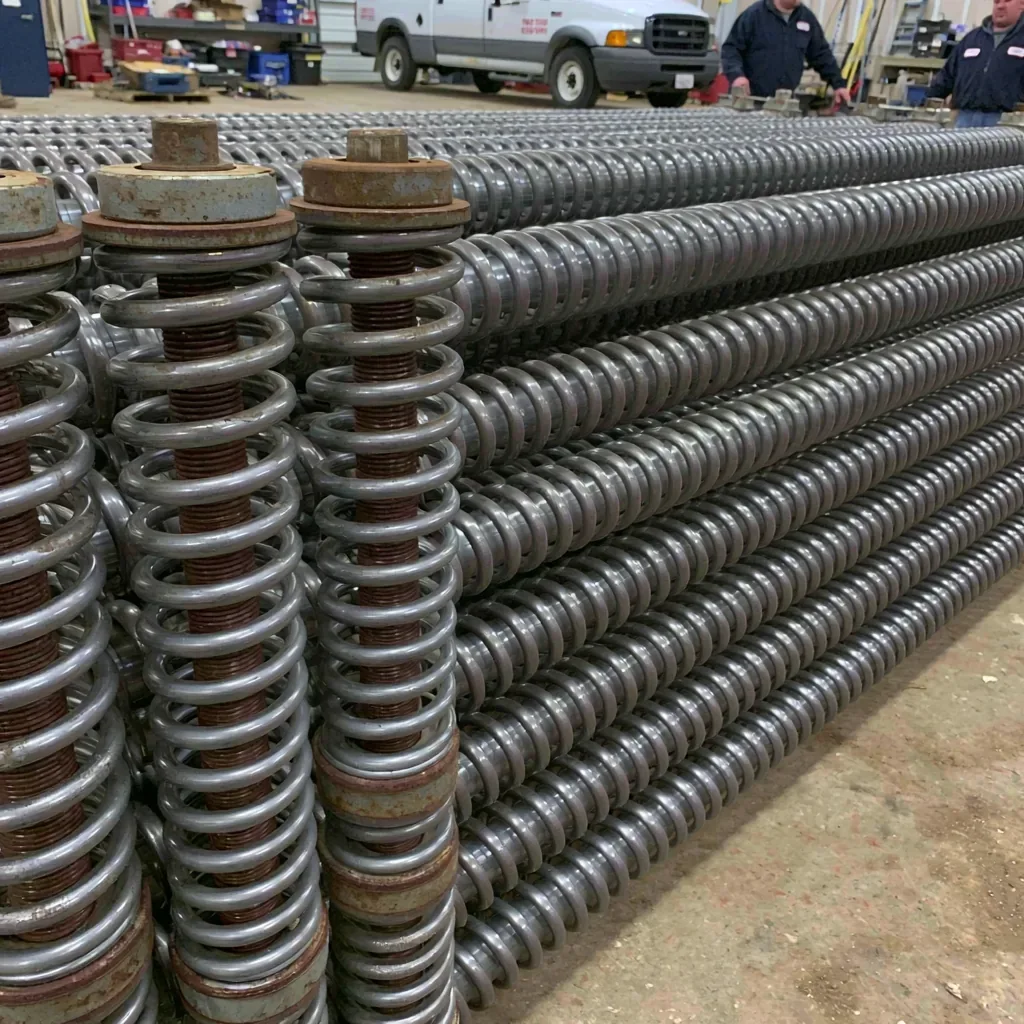
A torsion spring is sized to the exact dead weight of the door it lifts, not to the opening. In Leawood, swapping a thin uninsulated 16 by 7 panel for an insulated steel door with carriage-house overlay can add 30 to 60 pounds, and that change calls for different wire size, coil length, and lift. Old springs will leave the new door heavy, unbalanced, and hard on the opener. Matching springs are chosen by door weight and height on ordering day.
What Happens With Old Springs Kept
Timing in Leawood favors planning springs with the door order, not after. If your current springs are more than a few years old, show rust or gaps, or struggle after freeze-thaw cycles along Tomahawk Creek, do not carry them forward. Order new springs sized to the new door weight from the start. The pros we connect you with can confirm size from the door choice, so delivery and spring selection line up and the door is balanced from its first lift.
Timing matters in Leawood subdivisions with architectural review. Changing only coils is normally treated as a repair with no design review, while changing the visible door often needs HOA approval and sometimes city confirmation for opening changes. That makes it poor economy to buy springs weeks before a planned door change near Ironwoods Park or Tomahawk Creek. Wait for approval, order both together, and have the balance, tracks, and opener limits set once for the final weight.
Insulation Upgrades That Add Pounds
Older north Leawood ranches need special attention. Some 1960s and 1970s doors still run on extension hardware, sometimes without safety cables, while almost every newer suburban door uses torsion springs. If you replace the door, do not reuse that older system. The pros we connect you with can specify a torsion setup matched to the new insulated panels, which balances heavier modern doors more evenly and avoids carrying forward worn pulleys and stretched cables.
Sizing is about measurement, not guesswork, for a Leawood buyer. Door height, width, panel thickness, insulation, and glass all change the load, so two 16 by 7 doors can need different springs. Reusing the old color code or coil count ignores that change. The pros we connect you with use the new door weight and drum size to choose the correct springs, and they handle all tensioning, so you never need to touch winding bars or adjust tension yourself.
Signs Your Old Springs Are Tired
Buying both together also avoids paying twice in Leawood. A new door with old springs often calls the pros we connect you with back within months when the old coil snaps on a hard freeze below 20 degrees. That second visit means another charge, another day with a dead door over 150 pounds, and an opener forced to strain. Including correctly sized springs in the first order keeps one scope, one balance test, and one start to the service life.
A few signs tell a Leawood owner reuse is a poor bet. Visible rust from winter road grit and de-icing salt, stretched coils, noisy operation, or a door that feels heavy or will not stay half open all point to fatigue. Hail dents along College Boulevard and ice loads from winter storms add extra stress the old set already carried. If any of those show, ask for new springs sized to the replacement door, not a transfer.
Timing Both Jobs For One Visit
When you are ready for quotes in Leawood, bring the facts that size the job. Note the new door width and height, insulated or non-insulated construction, window and overlay weight, and whether the opener is belt or chain with battery backup. Mention age of the old coils, any slab shift at the apron, and frost or binding seen last winter in Johnson County. The pros we connect you with use those details to bring the right coils, and ask for proof of coverage plus a written estimate with guarantee terms upfront.
Plan the pair for fall when possible. A September or October decision in Leawood lets measurement, HOA approval near Mission Road or College Boulevard, and installation finish before hard freezes test the steel. If the door is already ordered, hold the spring work until it arrives so everything is weighed and balanced once. Still unsure? Common follow-ups are how much heavier insulated steel runs, whether overlays change coil choice, and what paperwork to keep after balancing.
Why Winter Forces The Decision
Most torsion breaks around Leawood happen from November through March, when a mild day in the 30s and 40s drops to a hard freeze overnight and tired steel contracts and lets go. Putting a fresh door on stretched, micro-cracked springs heading into January leaves the weakest link in place for the hardest season. Pairing new springs sized to the new weight gives full cycle life going into winter, instead of paying for a service call weeks after the door crew leaves.
Fall is the practical window in Leawood to plan both together, before de-icing salt and slab movement bind tracks. A September or October inspection lets the pros we connect you with weigh the planned door choice and specify springs with cold-rated lubrication for the season ahead. That avoids a January failure where the door sits dead at over 150 pounds and the opener cannot lift it alone. One winter-ready setup costs less disruption than two cold-weather visits.
HOA Rules Around Door And Springs
In many Johnson County subdivisions, a like-for-like spring swap is treated as a repair and needs no architectural approval, while a visible door change does. Homeowners near Hallbrook and the Hills of Leawood often need color, style, and overlay approval before ordering. Since springs must be sized to the approved door weight, wait for written approval, then order matched springs to that exact model to avoid re-sizing twice.
Approval timing matters for springs because wire size cannot be guessed from a brochure. Once your Leawood board approves the insulated or overlay option along College Boulevard corridors, the door weight is fixed and springs can be specified once. Ordering springs early to a guessed weight risks a second order and delay. Keep the approval letter with the spring size record for future service near Town Center Plaza shops.
Cost Timing Of Pairing Both Together
Reusing old springs looks like savings but leaves most of the lift system worn. In Leawood, a new insulated door on fatigued coils often runs heavy on one side, strains the opener, and breaks in the first cold snap. The service call, spring change, and re-balance then cost more separately than specifying fresh springs with the door order, when sizing and labor overlap in one visit.
Think in remaining life, not just age. If your Leawood springs have lifted a two-car door for seven to ten years near 135th Street, little useful life remains to donate to a heavier door. Pairing both resets the clock together, with matching warranty periods and one balance test. Keeping fairly new springs only fits when the replacement door matches the old weight within a few pounds.
Questions To Ask Before Ordering
Ask what the new door will weigh installed, and what spring size that weight requires, before you sign. In Leawood, the pros we connect you with can confirm torsion size from door model, height, and insulation level, rather than reusing the old coil markings. Get the spring specification, cycle rating, and warranty in writing with the door quote, so both parts are matched on paper.
Also ask how balance will be checked after pairing and what follow-up is included. A Leawood door near Ironwoods Park that moves on expansive clay can settle enough to need a re-check after the first season. Ask whether the quote includes track alignment check, opener force reset for the new weight, and cold-rated lubrication, without asking for adjustment instructions you should not attempt yourself.
When Keeping Springs Ever Makes Sense
The narrow exception is a like-for-like swap with the same weight and size. If a Leawood garage on Tomahawk Creek Trail needs the same uninsulated 16 by 7 steel replaced after hail, and its torsion springs are under two years old with paperwork, a pro may confirm they still match. Even then, most owners replace them because labor is already covered and old cycle wear remains.
When in doubt, time springs with the door order in Leawood rather than after failure. Steel fatigue, slab heave, and January cold snaps do not pause for budgeting, and a broken spring leaves the door dead weight. Ordering matched springs with the new door gives one balanced system, one warranty start, and fewer midwinter calls along Nall Avenue and Mission Road.
Dealing with this in your home?
In Leawood, most spring trouble starts with winter, not use, as repeated freeze-thaw cycles tighten fatigued steel until a cold night snaps a coil on an attached two-car sectional door. Johnson County homes from Hallbrook to the 135th Street corridor and near Ironwoods Park often show the same pattern: a door over 150 pounds dead, an opener straining, and roots drying clay on one side of the slab. This post explains why cold breaks happen, what a safe repair visit covers, and when to call the pros we connect you with.