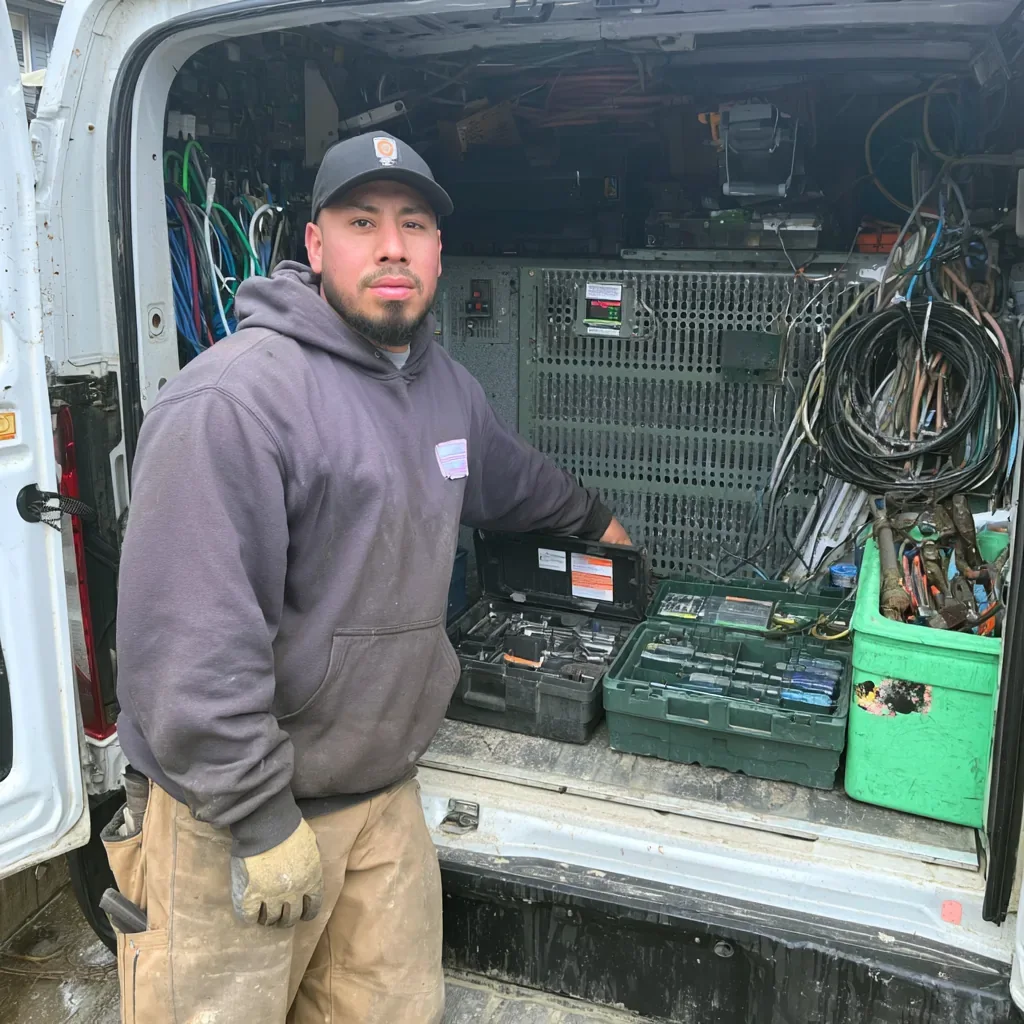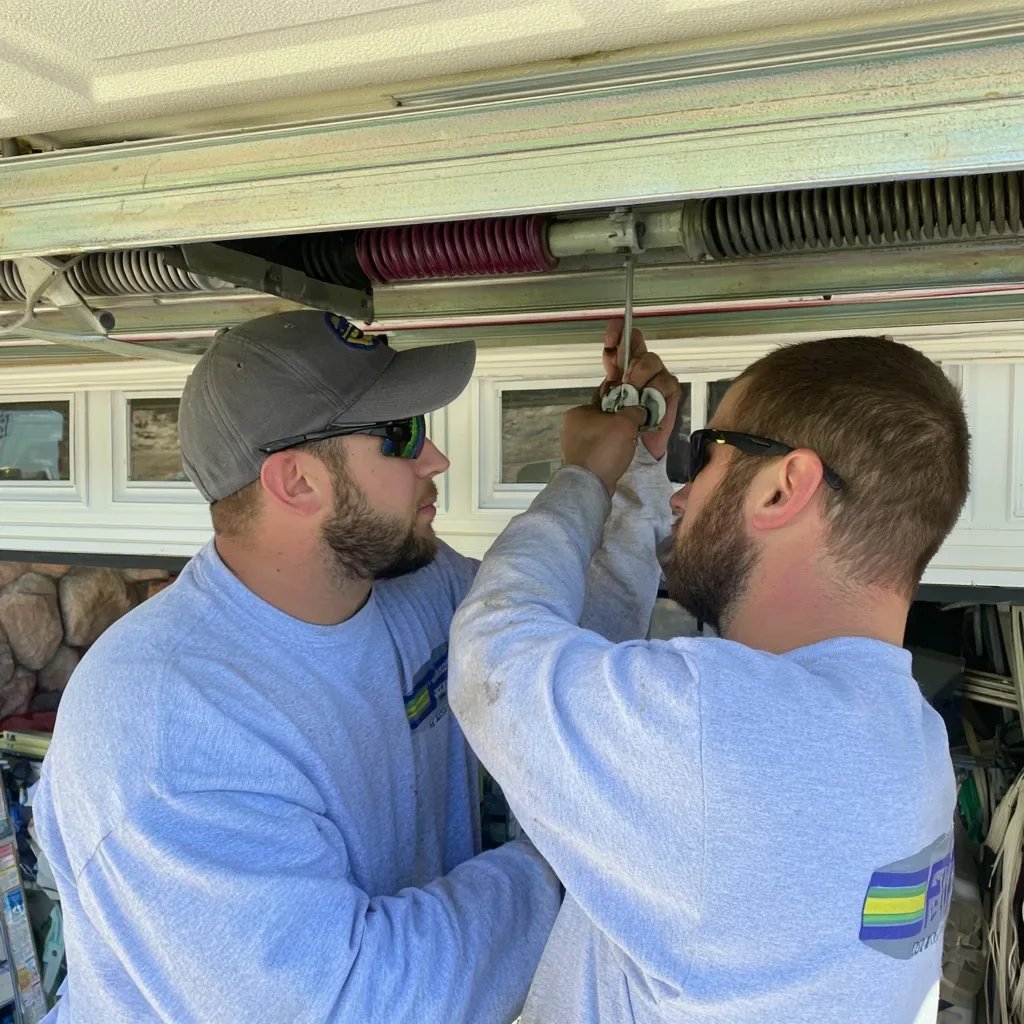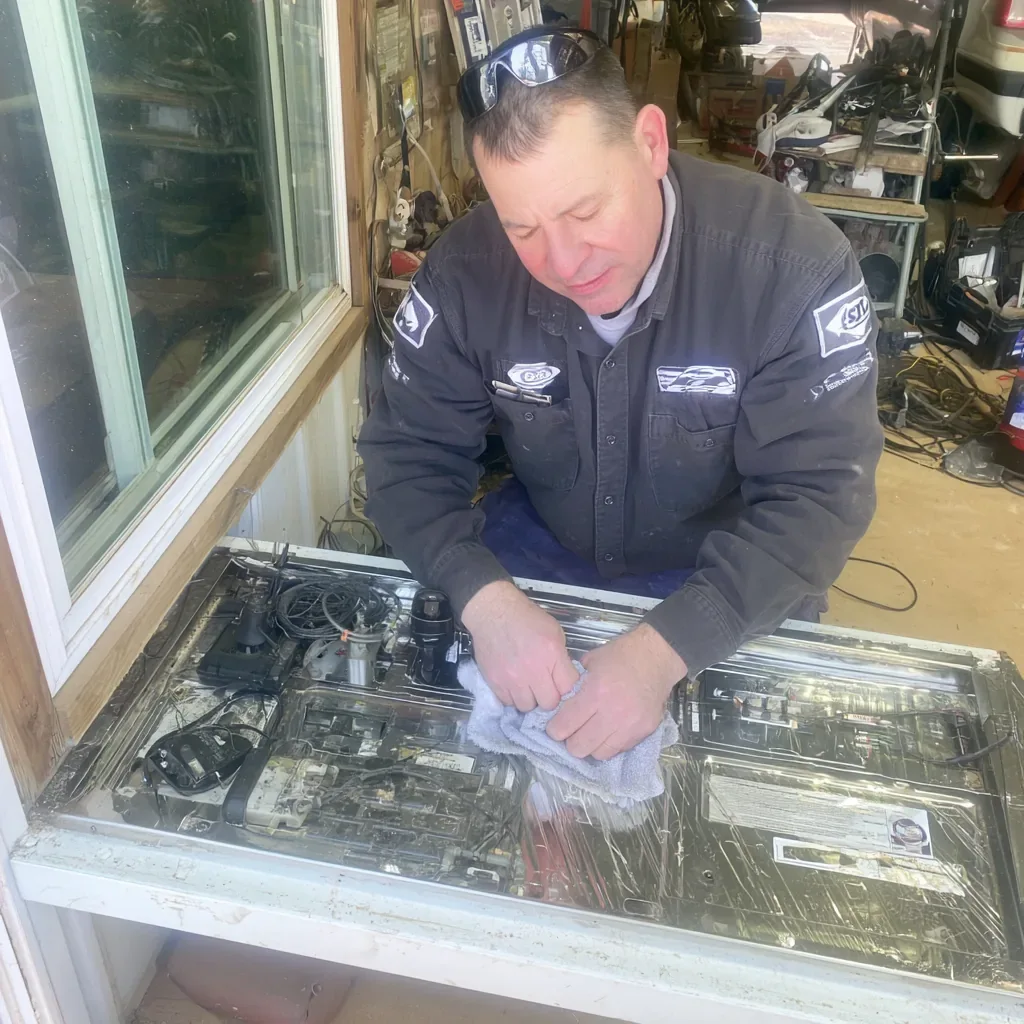
Most broken springs in Leawood get fixed in a single visit, but some jobs honestly need two. The difference is rarely scheduling; it is parts, measurements, and what the first look finds inside the garage. This page walks through the common reasons a return trip happens, from odd-size torsion pairs to enclosed tubes and rusted hardware. Understanding it ahead of time helps you know what to leave alone and what questions to ask when you call.
Leawood homes run mostly on standard torsion springs, so a matched pair is often straightforward. Cold snaps along State Line Road show the exception, when a heavy insulated door or an older conversion needs a wire size the stop does not carry. The sections below explain special orders, enclosed TorqueMaster limits, and rust or slab shift that turns a quick swap into a measured two-step job across Johnson County.
What a Second Visit Means
In Leawood, most subdivision doors are 16 by 7 or 18 by 7 sectional steel, and those common torsion pairs are widely available. A second visit usually starts with weight, not size. Insulated steel, glass sections, or a carriage-house overlay near Hallbrook can add enough pounds that a standard spring would lift unevenly and wear early. The pros we connect you with measure door height, track radius, and wire and coil length before ordering the correct match.
That measuring step matters in Leawood because a like-for-like swap needs no approval in most HOA areas, while guessing wrong creates drag and noise. Near 135th Street, newer three-car garages often have taller or heavier sections that look standard but call for high-cycle or custom-wound coils. Ordering the exact inside diameter, length, and wind direction takes a day or two, so the pro secures the door safely and returns with springs that balance it level.
Why Most Fixes Finish Quickly
Another two-trip cause in Leawood is the enclosed TorqueMaster tube found on some builder doors around Ironwoods Park. Instead of open coils above the opening, the springs sit inside a metal tube over the door. The design uses its own drums, gears, and end brackets that do not swap with standard torsion parts. When those plastic gears crack or the tube spring breaks, the replacement must match that exact system and is often a special order.
Homes in Leawood with that tube system sometimes choose a change to open torsion hardware during the second visit. The first visit is for inspection, measuring the door weight and headroom, and making the door safe to leave closed. The return brings a new shaft, standard drums and bearings, and matched open coils that future service can handle more easily. That switch can need added brackets or low-clearance parts, which is why it is not finished in one stop.
Special Springs Need Factory Orders
Rust is the quiet reason for a return in Leawood, especially after winter. De-icing salt and road grit tracked onto the concrete work into end bearings, hinges, and cable drums and slowly seize them. Around Tomahawk Creek corridors where garages stay damp longer, set screws can freeze to the shaft and rollers can lock in their stems. A pro will not force those parts, because a snapped screw or cracked drum throws the whole balance off.
Rusted hardware is another common reason a Leawood job pauses overnight. Road grit and de-icing salt tracked onto the concrete apron work into bottom brackets, end plates, and fasteners, and after a few hard winters from Hallbrook to Ironwoods Park and along 135th Street those parts can seize or crumble during removal. The pros we connect you with will stop rather than force a weakened bracket back into service. A second trip then covers new brackets, fresh fasteners, and a check that the tracks sit square before the new springs are fitted.
TorqueMaster Parts Are Harder to Match
North Leawood ranches near 95th Street still show the oldest reason for two visits. Those garages may carry extension springs along the side tracks rather than a torsion bar, and many lack safety cables through the coils. When one side breaks or stretches, the door cocks sideways and chews pulleys and jamb hardware. A careful inspection often finds mismatched sides or fatigued pulleys that must be ordered as a full safety set.
A tired opener is another find that pauses a Leawood spring job. After a break, many people try the remote a few times, and lifting more than 150 pounds of dead door weight overheats the motor and strips gears. Shops near Town Center Plaza see stripped nylon gears, bent top brackets, and frayed lift cables from that effort. The pro disconnects power, locks the door down, and returns with the right cable set or opener parts after the spring size is confirmed.
Rust Adds Parts and Time
Accurate measuring explains much of the wait in Leawood. Torsion balance depends on door height and weight, drum size, and spring wire thickness, coil count, and wind direction. A quick tape check from the floor cannot capture that, especially on insulated three-car doors in Leawood Estates. The first stop records those numbers, photographs nameplates, and checks headroom and side clearance so the ordered pair arrives ready to sit level.
Stock limits finish the story in Leawood without any promise of parts on a vehicle. Common pairs for plain steel two-car doors are often on hand around College Boulevard and Nall Avenue, yet odd winds, heavy overlays, or tube-system drums are not carried everywhere. Availability shifts by day and supplier, so callers are asked to confirm timing directly when calling and to leave the door closed and the opener unplugged until the return.
Cold Snaps Expose Hidden Damage
If your door sits crooked, feels over 150 pounds by hand, or bangs after a cold night near Mission Farms, readers in Leawood start asking the same follow-ups. Is mine a standard torsion pair or a special order by weight. Is the tube above my door a TorqueMaster that limits parts. Did salt rust or clay shift damage tracks and cables too. Those three answers decide whether one visit can finish it.
Before you call from the Hills of Leawood, note door size, steel or insulated face, and any tube cover or side springs, plus what sound it made when it failed. Keep children and cars clear, do not lift a dead door, and do not touch winding parts. Share those details with the pros we connect you with to get a clear plan, arrival window, and honest word on whether a second visit will be needed.
What Happens During the First Visit
During a first visit in Leawood, the pros we connect you with secure the door, weigh it in place, and record wire size, coil length, and inside diameter. They check drums, cables, bearings, and track alignment, plus look for rusted bolts and cracked hangers. In older Hallbrook homes with heavier insulated doors, that sizing step matters more because the wrong coil leaves the door heavy. You get a written scope with parts, labor, visit charges, and warranty terms before anything is ordered.
Between visits, leave the door closed and unplug the opener so no one tries to run dead weight overhead. Leawood freeze-thaw nights near twenty degrees can freeze a bottom seal to concrete, and forcing it bends panels and burns the motor. Keep cars and storage clear of the door path, keep children away from cables, and confirm timing directly when calling for the return trip. The return visit is shorter because measuring, safety checks, and parts approval are already done.
Why Special Sizes Cannot Be Substituted
Some Leawood doors near Ironwoods Park carry wider sixteen by seven or eighteen by seven insulated steel that needs a coil pairing not carried as a standard size. Carriage-house overlays, added insulation, or a previous mismatched swap change the weight, so the pros we connect you with must order matched coils by exact specification. Using a close-enough spring leaves one side heavy, wears cables, and strains a LiftMaster or Chamberlain opener. Waiting for the correct pair protects balance and keeps both springs aging together.
Ordering usually means the supplier matches the recorded measurements to a factory run and ships to Johnson County, which adds days rather than minutes. Availability varies by job and location, so confirm timing directly when calling instead of expecting a fixed window. A like-for-like spring swap in Leawood rarely needs a building permit, while structural or electrical changes might, and that check can also set the return date. Honest scheduling keeps the door safe rather than forcing a wrong part to finish in one trip.
Why Tube Systems Often Need Rework
TorqueMaster tubes sit inside the spring and use proprietary cones and drums, common on some Leawood tract builds south toward 135th Street. Those parts do not interchange with standard torsion hardware, and some older versions are no longer made, so a direct swap is not always on hand. The pros we connect you with identify the tube style on the first trip, explain whether a factory kit exists, and price a conversion to standard front-mounted torsion hardware where the maker allows it.
When conversion is the answer, the second visit covers new end plates, a solid shaft, drums, cables, and matched springs sized to the door weight. Leawood HOA subdivisions usually allow a like-for-like spring repair without architectural review, while a full door change needs approval, so staying with the same door keeps paperwork simple. Track square and opener force are re-checked after the change, with cold-rated silicone or lithium grease applied by a pro. That full reset is why the tube system often takes two appointments.
When Rust Turns One Repair Into Two
Road grit and de-icing salt tracked into Leawood garages pit cables, rollers, and end bearings, and homes near Tomahawk Creek see longer damp seasons that stiffen that corrosion. A rusted set screw or seized drum cannot be forced without snapping a bolt or cracking the bracket, so the first visit becomes stabilization and penetrating treatment plus a parts list. If a shaft, drum, or cable has lost diameter to rust, ordering matching hardware with the springs is safer than reusing thin metal under full door weight.
A second trip in Leawood usually comes down to parts match, not effort. Odd-weight insulated doors in Hallbrook and homes near Ironwoods Park often need special-order torsion springs by wire size and length, while TorqueMaster tubes accept only matching ends and cannot take standard hardware. Heavily rusted end plates, seized set screws, or a bent track found near 135th Street can also pause work until the right part arrives. A clear photo and door measurements help the pros we connect you with plan honestly for one visit or two.
How to Plan for a Return Trip
Before the pros we connect you with leave the first time, ask for photos of the spring stamping, the door weight, and the rusted parts flagged for replacement. In Leawood, ask for proof of liability insurance, the county license where the work needs one, and a written scope showing arrival window, visit charges, parts, labor, and warranty terms. Keep the door closed until the return, and confirm timing directly when calling if ice or hail has slowed work across the metro.
A broken torsion spring leaves more than one hundred fifty pounds of dead door that an opener cannot lift alone, and repeated attempts burn the motor. Leawood homes from State Line Road to Mission Farms feel the January freeze that snaps tired coils overnight, so a short wait for matched parts beats a mismatched fix that fails early. Use the September to October inspection rhythm for next year, with cold-rated lubrication applied by a pro, and monthly winter checks of seals and photo-eyes without forcing a frozen panel.
Dealing with this in your home?
In Leawood, most spring trouble starts with winter, not use, as repeated freeze-thaw cycles tighten fatigued steel until a cold night snaps a coil on an attached two-car sectional door. Johnson County homes from Hallbrook to the 135th Street corridor and near Ironwoods Park often show the same pattern: a door over 150 pounds dead, an opener straining, and roots drying clay on one side of the slab. This post explains why cold breaks happen, what a safe repair visit covers, and when to call the pros we connect you with.